Does Epoxy Flooring Increase Home Value? A 2026 Guide
Table of Contents
How Epoxy Flooring Affects Resale Value and Buyer Perception
What Buyers Notice First: Curb Appeal and First Impressions
Appraiser vs. Realtor Perspectives on Epoxy Flooring
Epoxy Flooring Cost Per Square Foot: What Homeowners Should Budget
What Changes the Price After the Quote
The Epoxy Flooring Installation Process: From Surface Prep to Topcoat
DIY vs. Professional Installation: What Affects Longevity and Warranty
Durability, Concrete Protection, and Return on Investment
Warranty Transferability: The Overlooked Value Lever
Appraiser Perspective vs. Realtor Perspective on Durability
Epoxy Floor Maintenance Tips That Protect Your Investment
Regional Climate Considerations for Epoxy Floors
Frequently Asked Questions
Last Updated: September 15, 2026
How Epoxy Flooring Affects Resale Value and Buyer Perception
Does epoxy flooring increase home value? It rarely shows up as an appraisal line item, but it reliably changes how quickly a home sells and how buyers feel about the space. Epoxy flooring is a poured resin coating that bonds to a prepared concrete substrate, creating a seamless, durable surface. This guide from Northern Escapes Services breaks down what that means for your sale price, timeline, and renovation budget.
Garages and basements are where concrete is visible and buyers judge fastest. A cracked, stained slab reads as deferred maintenance; a clean, coated slab reads as a finished space.
Key Takeaway Epoxy flooring is best understood as a marketability upgrade rather than a valuation upgrade. It shortens time on market and improves buyer impression, but it will not add a fixed dollar figure to an appraisal.
What Buyers Notice First: Curb Appeal and First Impressions
Curb appeal starts before anyone steps inside, and the garage floor is often the first concrete surface a buyer sees up close. A coated floor signals the home has been maintained.
The effect is real even when square footage is identical. A showroom finish makes a two-car garage feel like usable living space rather than storage, and in basements a sealed slab removes the damp, unfinished feeling that makes buyers hesitant.
What most guides miss is that buyers rarely identify the coating itself. They describe the room as "clean," "finished," or "well kept" without knowing what product is on the floor. The upgrade works by removing objections, not by announcing itself.
Appraiser vs. Realtor Perspectives on Epoxy Flooring
Appraisers and realtors evaluate epoxy flooring on different scales, and understanding the gap prevents disappointment at listing time. An appraiser works from comparable sales and depreciated cost, treating a floor coating as a minor improvement. Realtors work from buyer behavior, where a finished-looking garage or basement can justify a stronger list price and fewer concessions.
Perspective | How Epoxy Flooring Is Evaluated | Practical Impact |
Appraiser | Minor improvement, depreciated cost approach | Small or no separate line-item value |
Realtor | Buyer impression and marketability | Faster sale, stronger negotiating position |
Buyer | Perceived value of a finished space | Fewer objections during showings |
Lender | Condition and marketability of the property | No direct adjustment |
The takeaway: epoxy flooring supports your asking price through demand, not the appraisal grid. If you are refinancing rather than selling, expect the coating to matter far less.
Epoxy Flooring Cost Per Square Foot: What Homeowners Should Budget
Epoxy flooring cost per square foot varies widely because the price is driven by surface preparation, coating system, and slab condition rather than the coating alone. A sound, dry slab needs far less work than a pitted one with previous coatings to remove.
Several variables move the number:
Concrete substrate condition: cracks, spalling, and old sealer all add prep time
Moisture barrier requirements: slabs without a vapour barrier may need additional products
Coating system: standard epoxy versus polyaspartic topcoats differ in material cost
Square footage: larger slabs lower the per-unit rate because setup is spread thinner
Access and ventilation: tight or poorly ventilated spaces slow the work
Number of coats and broadcast aggregate: a single base coat with no slip-resistant broadcast is cheaper than a multi-coat system with aggregate and a polyaspartic topcoat
Separate the cost into three buckets: preparation, materials, and labour. Preparation is the most variable and consequential, diamond grinding or shot blasting, crack and spall repair, and moisture testing are not optional, and a quote that omits them is a lower price for a shorter-lived job. Materials scale with the system: a standard epoxy base coat with a clear topcoat sits at the lower end, while a full broadcast system with a polyaspartic topcoat sits at the upper end because the topcoat resists UV yellowing and cures faster. Labour scales with square footage and access.
Because pricing depends on these factors, any figure quoted without seeing your slab is a guess. A contractor who quotes over the phone without moisture testing or a site visit is either padding the number or planning to cut preparation once work begins. Northern Escapes Services publishes transparent pricing and provides detailed contracts, so you can see what is included before work begins.
Watch Out The most common mistake is comparing quotes on the headline rate alone. A lower quote that excludes surface preparation or a moisture barrier will cost more once the coating fails and has to be removed.
What Changes the Price After the Quote
Even a well-prepared quote can shift once work starts. The most frequent trigger is a failed moisture barrier or a slab previously sealed with a product that must be chemically stripped before grinding, both add labour and materials not visible during the walkthrough. Hidden spalling or delamination, where the top layer of concrete separates and must be patched, is another. Access matters too: a garage packed with stored items takes longer to clear and protect, and that time is billable.
A contract that lists these contingencies with a clear approval process is more useful than a single all-in number. Ask for the preparation method in writing, the number of coats, the product type for each coat, and the cure time before the floor can be walked on or loaded.
The Epoxy Flooring Installation Process: From Surface Prep to Topcoat
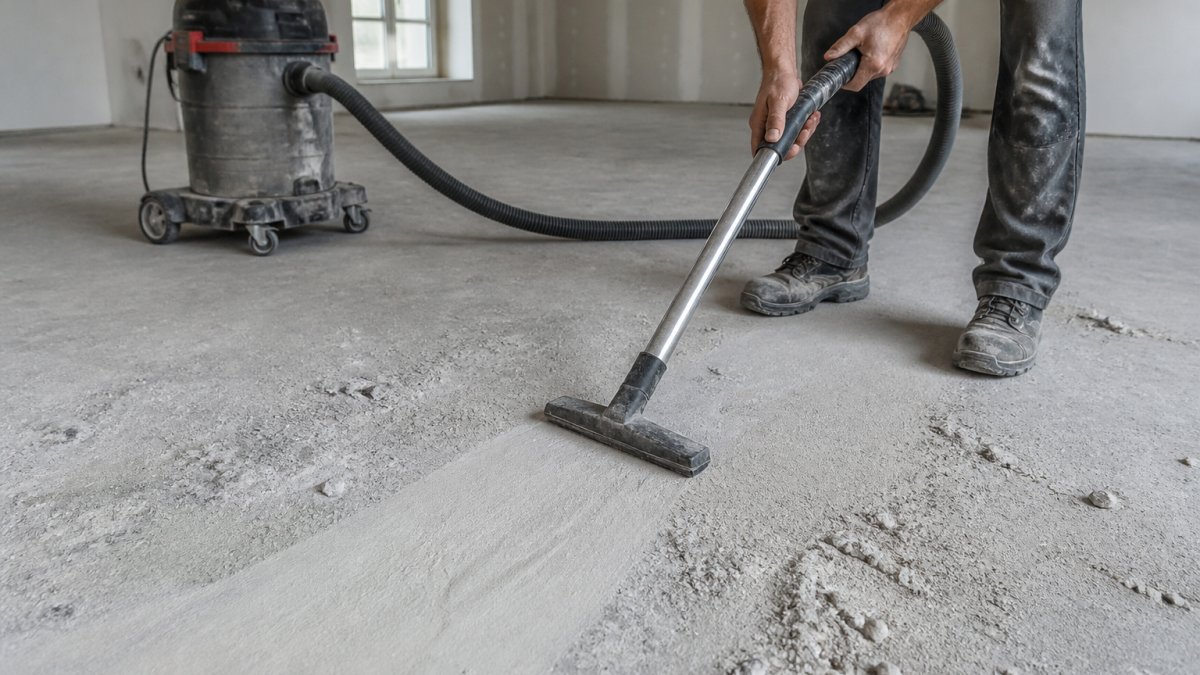
The epoxy flooring installation process follows a fixed sequence, and skipping or rushing any stage causes peeling, bubbling, and premature wear. Surface preparation typically takes longer than the coating itself.

The stages run in this order:
Assessment and moisture testing of the concrete substrate
Surface preparation, usually diamond grinding or shot blasting to open the concrete profile
Crack and spall repair with appropriate patching material
Primer or moisture barrier application where the slab requires it
Base coat of epoxy, broadcast with aggregate for slip resistance if desired
Topcoat, often polyaspartic for UV stability and faster curing time
Curing, during which the floor cannot be walked on or loaded
Curing time depends on the system and the ambient temperature. Cooler conditions extend it, which matters in an unheated garage.
DIY vs. Professional Installation: What Affects Longevity and Warranty
DIY epoxy kits sell on the promise of a weekend project, and the failure mode is predictable. The kits are not the problem; the missing diamond grinding step is. Coatings applied over a sealed or inadequately profiled slab bond to the contaminant, not the concrete, and lift within a season or two.
Professional installation changes three things: preparation equipment, product grade, and warranty transferability. A contractor-installed coating typically carries a workmanship warranty a homeowner-applied kit cannot, and that warranty can reassure a buyer who asks about the floor.
The trade-off is cost and scheduling: you pay for equipment and labour you cannot replicate in a driveway, and you wait for a crew rather than working around your own weekends.
Pro Tip Ask any installer how they prepare the slab before you discuss colour or finish. If the answer does not include mechanical grinding or shot blasting, the coating is being applied over whatever was there before.
Durability, Concrete Protection, and Return on Investment
Durability is where epoxy earns its place in a renovation budget, because the coating protects the concrete substrate itself. Sealed concrete resists road salt, oil, and freeze-thaw cycling far better than bare slabs. Bare concrete is porous, and water that enters those pores expands when it freezes, prying the surface apart in a process called freeze-thaw spalling. A properly bonded coating seals the surface and keeps liquid water out of the pore structure, which is why a coated slab in a cold climate typically outlasts an uncoated one.
The return on investment calculation is less tidy. Epoxy flooring is a home improvement with a modest direct payback, and its financial case rests on avoided repair costs and faster sale rather than a measurable bump in property valuation.
Where it does pay is in floor longevity. A protected slab resists the pitting and surface loss that eventually require expensive concrete replacement, and chemical resistance against oil and de-icing products keeps the surface intact through repeated winters. The avoided cost is the slab replacement a failed slab would otherwise require.
Warranty Transferability: The Overlooked Value Lever
Most guides treat the warranty as a homeowner convenience, but a transferable workmanship warranty is one of the few tangible, documentable value points an epoxy floor can add at resale.
Appraiser Perspective vs. Realtor Perspective on Durability
Epoxy Floor Maintenance Tips That Protect Your Investment
A few habits extend the floor's life considerably:
Regional Climate Considerations for Epoxy Floors
Frequently Asked Questions
What's the downside of epoxy flooring?
Epoxy flooring can be slippery when wet unless an anti-slip additive is used, and it requires thorough surface preparation to bond properly. It is also difficult to remove once cured, so it is considered a semi-permanent upgrade. In cold climates, epoxy can become brittle over time if the concrete substrate shifts. Proper installation and a moisture barrier reduce these risks significantly.
How much does it cost to epoxy 1000 sq ft?
Epoxy flooring cost per square foot varies based on surface condition, coating thickness, and whether a moisture barrier or decorative finish is added. For a 1000 sq ft area, pricing depends on these factors and the number of coats required. Request a detailed quote from Northern Escapes Services to get an accurate figure for your specific project.
How long do epoxy floors last in a house?
A professionally installed epoxy floor typically lasts 10 to 20 years in a residential setting, depending on traffic, maintenance, and climate. In garages exposed to road salt and freeze-thaw cycles, lifespan may be shorter without a protective topcoat. Following epoxy floor maintenance tips like regular sweeping and prompt spill cleanup helps extend floor longevity.
Does epoxy flooring increase home value?
Yes, epoxy flooring can increase home value by improving curb appeal, protecting the concrete substrate, and creating a low-maintenance, showroom-quality finish. While appraisers may not assign a specific dollar amount, buyers often perceive a well-coated garage or basement floor as a sign of a well-maintained home, which supports marketability and resale value.
Get Started Today
Comments