What to Ask Flooring Contractors: 2026 Homeowner Guide
Table of Contents
Why the Right Questions Save You Money and Stress
Questions to Ask About Epoxy Flooring Installation
Surface Preparation and Moisture Testing
Curing Time and Cold-Weather Installation
Freeze-Thaw Cycles and Road Salt
Slip Resistance for Wet and Icy Conditions
Substrate Repair and Joint Treatment
Verifying Contractor Insurance and Licensing
Flooring Project Timeline Expectations
Why Cold Weather Stretches the Schedule
Cure Windows and When You Can Use the Floor
Scheduling Around Moisture Mitigation
Red Flags When Hiring Flooring Contractors
Comparing Flooring Options: Epoxy, Hardwood, Tile and Vinyl
Understanding Flooring Costs and Contract Details
Frequently Asked Questions
Last Updated: September 15, 2026
Why the Right Questions Save You Money and Stress
The single most effective way to protect a flooring investment is to interview the contractor before you sign anything. Knowing what to ask flooring contractors separates a smooth renovation from a costly dispute, because the answers reveal how a company handles surface preparation, moisture, scheduling, and changes.
Epoxy flooring is a resin-based coating system poured over a prepared concrete substrate. It bonds chemically to the slab, creating a seamless finish that resists stains, chemicals, and heavy foot traffic when installed correctly. The catch: most failures trace back to skipped steps, not bad products.
Below, we break down the exact questions that expose a contractor's process, timeline, and pricing habits before work begins.
Questions to Ask About Epoxy Flooring Installation
Ask how the contractor prepares the slab, tests for moisture, and plans for the temperature on install day. Surface preparation and slab condition decide whether an epoxy job lasts a decade or blisters in one season, and a vague answer here is your first warning sign.

Surface Preparation and Moisture Testing
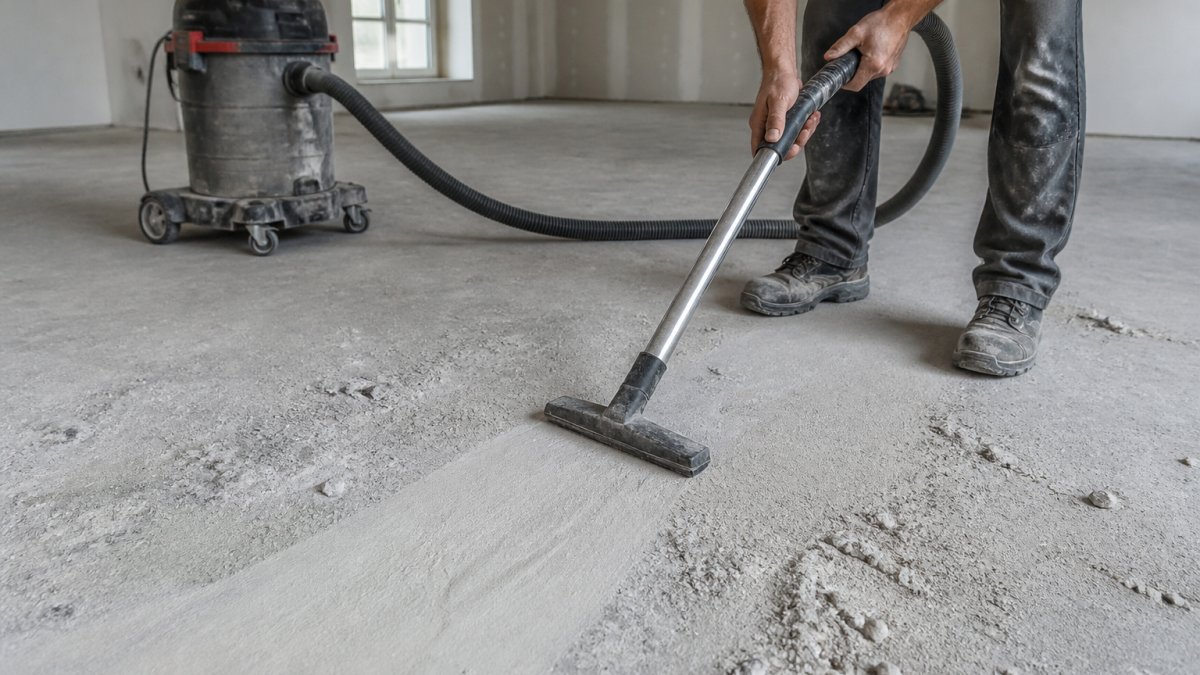
Surface preparation is the mechanical profiling of concrete so the epoxy can grip. Most professionals use diamond grinding or shot blasting rather than acid etching, because grinding removes contaminants and opens the concrete's pores. Ask what surface profile the crew targets; coating manufacturers typically specify a concrete surface profile (CSP) in the range of CSP 2 to CSP 3 for a standard epoxy base coat, and a contractor who can name that number is working from a spec sheet rather than a habit.
Moisture vapor transmission (MVT) is water vapor rising through the slab from below. If it's high, a coating can blister or peel within months. Ask whether the contractor tests for it, how, and what result would trigger a vapor barrier or moisture mitigation primer. The standard field test is the calcium chloride test, which reports pounds of water vapor per 1,000 square feet per 24 hours; a second common method is in-situ relative humidity probes placed in drilled holes. Most coating manufacturers publish a maximum MVT or relative humidity threshold in their installation guide, and a contractor should be able to quote the number for the product they plan to use.
Curing Time and Cold-Weather Installation
The curing process is the chemical reaction that hardens resin and hardener into a solid film. Cold slows that reaction dramatically. Ask how the contractor handles curing time in cold temperatures, and whether they heat the space or use a faster-reacting product. A crew that ignores temperature is a crew that delivers soft, cloudy floors.
Two numbers matter more than any other on install day: the slab temperature and the ambient temperature. Most epoxy systems specify a minimum substrate and air temperature, commonly in the range of 10°C to 15°C, and a maximum relative humidity, often around 75% to 85%. Ask the contractor to check both with an infrared thermometer and a hygrometer before mixing, not after. A related trap is the dew point: if the slab surface is at or below the dew point, moisture condenses on the concrete and the bond fails. Experienced installers calculate dew point and postpone the pour if the margin is too thin.
Watch Out Applying epoxy below the product's rated temperature range can leave a tacky surface that never fully hardens. Ask for the manufacturer's minimum temperature and how the contractor plans to meet it, and ask what happens to the schedule if the space can't be held at that temperature.
Freeze-Thaw Cycles and Road Salt
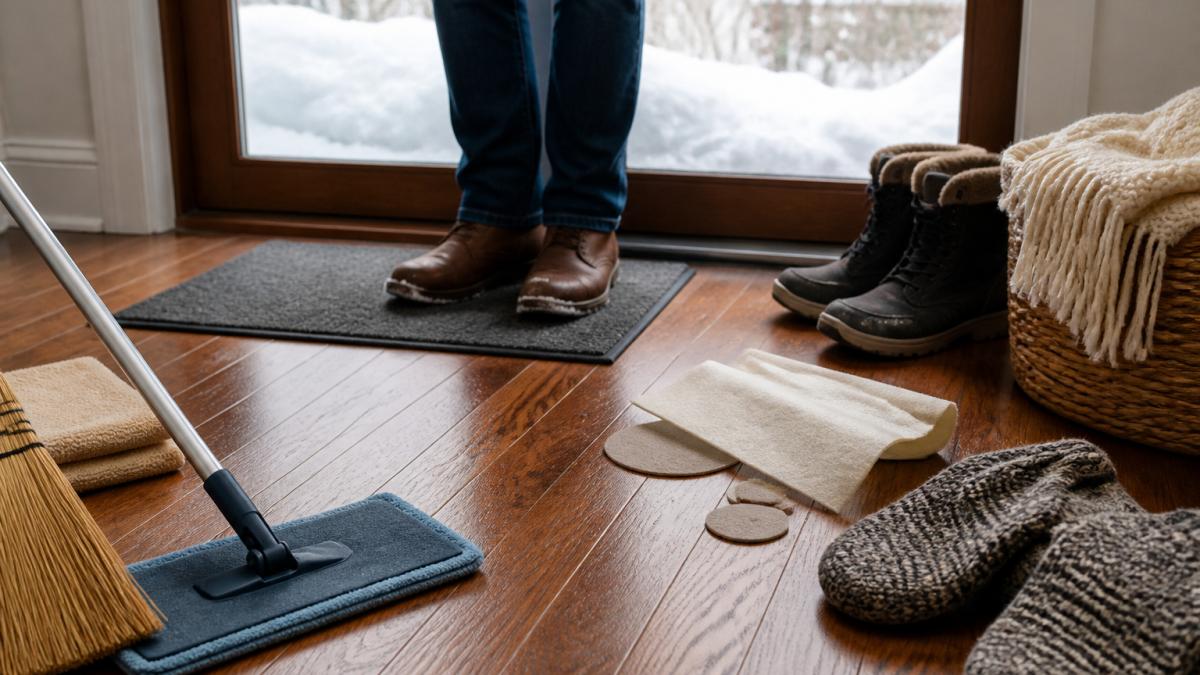
This is the question most homeowners never think to ask, and it's the one that separates a floor that survives a decade of winters from one that spalls in three. Concrete in an unheated garage or a slab-on-grade basement expands and contracts with every freeze-thaw cycle, and de-icing salt tracked in on boots accelerates the damage by driving chloride into the surface.
Ask the contractor how the coating system handles thermal movement. A rigid, high-build epoxy alone can crack when the slab moves; many northern installers specify a flexible or elastomeric base layer, or a polyaspartic topcoat, to absorb that movement. Ask whether the topcoat is rated for chloride exposure, and whether the crew will seal control joints and cracks with a semi-rigid filler before coating so the joint doesn't telegraph through the finish.
Slip Resistance for Wet and Icy Conditions
A glossy epoxy floor is slick when wet, and tracked-in slush makes it worse. Ask whether the contractor adds an anti-slip aggregate, usually aluminum oxide or silica grit, to the topcoat, and at what broadcast rate.
Substrate Repair and Joint Treatment
Verifying Contractor Insurance and Licensing
Ask these three questions directly:
Flooring Project Timeline Expectations
Phase | Typical Duration | Notes |
Assessment and moisture testing | 1-2 days | Depends on slab size and access; MVT or RH test results may add a mitigation step |
Surface preparation | 1-2 days | Diamond grinding or shot blasting to the specified profile |
Crack and joint repair | 0.5-1 day | Filler and sealant must cure before coating |
Coating application | 1-2 days | Base coat plus topcoat, with a recoat window between each |
Full cure before heavy use | 3-7 days | Longer in cool conditions; foot traffic sooner than vehicle traffic |
Why Cold Weather Stretches the Schedule
Pro Tip Ask the contractor to build a weather contingency into the written schedule. A one-day slip in surface prep can push the whole job past a cold front, and a crew that plans for it won't be scrambling.
Cure Windows and When You Can Use the Floor
Scheduling Around Moisture Mitigation
Red Flags When Hiring Flooring Contractors
Pro Tip Ask for two recent local references and actually call them. Ask specifically whether the floor still looks good after a full winter, since cold and moisture stress a coating more than anything else.
Comparing Flooring Options: Epoxy, Hardwood, Tile and Vinyl
Flooring Type | Best For | Durability | Maintenance |
Epoxy | Garages, basements, workshops | High abrasion and impact strength | Easy; damp mop |
Hardwood | Living areas, resale value | Moderate; dents and scratches | Regular refinishing |
Tile | Kitchens, bathrooms | High; resists water | Grout cleaning |
Vinyl | Budget renovations | Moderate | Simple sweep and wash |
Understanding Flooring Costs and Contract Details
Key Takeaway Transparent pricing means a written scope that lists what's included and what isn't. Get it before you sign, and confirm how changes are priced if the job expands.
Frequently Asked Questions
What's the downside of epoxy flooring?
Epoxy floors are durable and seamless, but they have limits. The coating can be slippery when wet unless slip-resistant additives are used. It requires careful surface preparation, and if moisture vapor transmission is not addressed, delamination can occur. Epoxy also needs a full curing process before heavy use, and cold temperatures can slow that cure. In homes, epoxy is best suited to garages, basements and utility areas rather than living rooms.
How long do epoxy floors last in a house?
A properly installed epoxy floor in a home typically lasts 10 to 20 years, depending on traffic, surface preparation and maintenance. Floor longevity improves when the concrete substrate is correctly prepped through diamond grinding and when a polyaspartic topcoat is applied for UV stability. High-traffic areas and garages with road salt exposure may show wear sooner. A regular maintenance schedule and prompt cleaning of spills help extend the floor coating system's life.
What qualifications should I look for in a flooring contractor?
Look for a contractor with specific experience in your flooring type, such as epoxy or hardwood refinishing. Ask about their surface preparation standards, including diamond grinding and moisture testing. Confirm they carry liability insurance and are in good standing with the Workplace Safety and Insurance Board (WSIB). Request references from recent projects similar to yours. A contractor who provides a detailed written contract and transparent pricing is usually more reliable.
How do I verify a flooring contractor's insurance and WSIB coverage?
Ask for a certificate of insurance showing general liability coverage and the policy's expiry date. For WSIB, request a clearance certificate directly from the contractor or verify their status through the WSIB online service. A legitimate contractor will provide these documents without hesitation. If they cannot show current coverage, that is a serious red flag. Never rely on verbal assurance alone, as you could be liable for injuries on your property.
What details should be included in a professional flooring contract?
A solid contract should list the scope of work, materials and products to be used, surface preparation methods, project timeline, payment schedule and warranty terms. It should also state who is responsible for moving furniture and disposing of old flooring. For epoxy projects, specify the number of coats, the type of topcoat and the curing time. Transparent pricing means the contract clearly separates labor, materials and any potential extras.
How do I determine if a contractor is experienced with epoxy flooring?
Ask how they handle moisture vapor transmission, what surface preparation method they use and how they manage curing in cold temperatures. An experienced contractor will mention diamond grinding, moisture barriers and slip-resistant additives without prompting. Request photos of completed epoxy projects and ask for references from at least two recent jobs. If they cannot explain the curing process or avoid discussing freeze-thaw cycle performance, they may lack the specific expertise you need.
Choosing the right flooring contractor comes down to the questions you ask before the first coat is poured. Northern Escapes Services combines detailed installation methods, comprehensive project tracking, and transparent pricing to deliver flooring that holds up through every season. Get started with Northern Escapes Services and transform your space with a contractor who answers every question up front.
Get Started Today
Comments