Top 5 Durable Flooring Options for Cold Climate Basements
Table of Contents
Quick Comparison: The Top 5 Durable Flooring Options for Cold Climate Basements
How the Five Options Stack Up
1. Luxury Vinyl Plank: The Waterproof Workhorse
Why LVP Handles Freeze-Thaw Cycles
2. Engineered Hardwood: Real Wood, Real Stability
How Plywood Cores Resist Dimensional Shifts
3. Cork Flooring: Warm Underfoot, Naturally Mold-Resistant
R-Value and Sound Attenuation Compared
4. Ceramic and Porcelain Tile: The Longest-Lasting Surface
5. Epoxy Floor Coating: Seamless and Maintenance-Free
Basement Subfloor Insulation Requirements in Cold Climates
R-Value Targets by Assembly
Vapor Retarder Placement and Freeze-Thaw Cycling
Radiant Heating Compatibility
Matching the Subfloor to the Flooring
Best Practices for Basement Floor Preparation
Test the Slab Before You Buy Anything
Indoor Air Quality in a Sealed Basement
Plan for Repairability Before You Install
The Climate-Specific Layer Most Guides Skip
Frequently Asked Questions
Last Updated: September 15, 2026
Quick Comparison: The Top 5 Durable Flooring Options for Cold Climate Basements
Choosing flooring for a below-grade space starts with one uncomfortable fact: the slab is always colder and damper than the rest of the house. That single condition eliminates half the products sold at big-box stores. This guide from Northern Escapes Services ranks the top 5 durable flooring options for cold climate basements by how they handle freeze-thaw cycling, slab moisture, and direct contact with cold concrete.
A basement floor is a surface that sits in permanent contact with concrete below grade, where temperature swings between seasons drive moisture migration through the slab. The products that survive that environment share three traits: they resist water at the core, they tolerate dimensional movement, and they do not rely on a bond that moisture can break.

How the Five Options Stack Up
Option | Moisture Resistance | Underfoot Warmth | Repairability | Best For |
Luxury vinyl plank | Waterproof core | Moderate with underlayment | Individual plank swaps | Whole-basement coverage |
Engineered hardwood | Good with vapor retarder | Warm | Board-level repair | Living areas above grade slab |
Cork | Naturally mold-resistant | Highest | Section replacement | Rec rooms, home offices |
Ceramic and porcelain tile | Excellent | Cold without in-floor heat | Tile-by-tile with spare stock | Laundry, bath, utility zones |
Epoxy coating | Sealed surface | Cold | Full recoat | Utility and workshop spaces |
The rest of this guide explains why each one earns its place, and where it falls short.
1. Luxury Vinyl Plank: The Waterproof Workhorse
Luxury vinyl plank is the most forgiving choice for a cold, damp slab because its core is waterproof through its full thickness. Water that migrates up through concrete does not swell the plank, delaminate the backing, or stain the wear layer.
The construction matters more than the marketing. Look for a rigid core, a wear layer rated for residential traffic, and a click-lock installation profile that lets the floor move as one floating floor system rather than being glued down. Floating installation is the right call over concrete because it leaves the slab free to expand and contract without cracking the finish.
Why LVP Handles Freeze-Thaw Cycles
A slab in an unheated or partially heated basement goes through a freeze-thaw cycle every winter. Rigid-core plank absorbs that movement at the joints instead of at the surface.
Pro Tip Leave a consistent expansion gap at every wall and cover it with baseboard rather than caulking it shut. Planks that are pinned tight against the perimeter have nowhere to go when the slab moves, and the seams open up in the middle of the room instead.
The trade-off is feel. Vinyl is thin, and over bare concrete it reads cold underfoot. A cork or foam underlayment fixes most of that, and it doubles as a sound attenuation layer.
2. Engineered Hardwood: Real Wood, Real Stability
Engineered hardwood is the only real-wood option worth putting in a basement, and its advantage comes entirely from the core. A cross-ply plywood core resists the dimensional shifts that make solid hardwood cup and gap over concrete.
How Plywood Cores Resist Dimensional Shifts
Wood is hygroscopic, meaning it takes on and releases moisture with the surrounding air. A cross-ply core counteracts that movement because each layer runs perpendicular to the one below it. The panel stays flat even as individual layers swell and shrink.
That stability has limits. Engineered hardwood still needs a vapor retarder between the slab and the floor, and it still needs acclimation to the room before installation. Skip either step and you will see gapping at the seams by the second winter.
Watch Out Do not install engineered hardwood over a slab that has not been tested for moisture. A cheap moisture test before installation costs far less than tearing out a finished floor after the boards cup.
3. Cork Flooring: Warm Underfoot, Naturally Mold-Resistant
Cork is the warmest option on this list, and that warmth is not just a feeling. Its cellular structure traps air, which gives it genuine thermal resistance and makes it the best match for a basement you actually want to spend time in.
R-Value and Sound Attenuation Compared
Cork's R-value per unit of thickness beats vinyl, tile, and epoxy by a wide margin. It also absorbs sound, which matters in a basement rec room where hard surfaces turn every footstep into an echo. The catch is that cork needs a proper finish and a moisture barrier, and it dents under heavy point loads like a piano leg or a dropped dumbbell.
4. Ceramic and Porcelain Tile: The Longest-Lasting Surface
Tile wins on lifespan and loses on comfort. A porcelain tile floor over a prepared slab will outlast every other option here, and it will not care about humidity, spills, or standing water.
The problem is the cold. Ceramic and porcelain conduct heat away from your feet quickly, so an unheated tile basement floor feels like standing on the slab itself. In-floor heating solves that, and tile is the ideal surface for it because of its thermal conductivity. Grout sealing matters too, since unsealed grout in a damp basement invites mildew.
5. Epoxy Floor Coating: Seamless and Maintenance-Free
Epoxy is the right answer when the basement is a workshop, utility room, or storage area rather than living space. It bonds directly to prepared concrete, leaves no seams for water to sit in, and wipes clean with a mop.
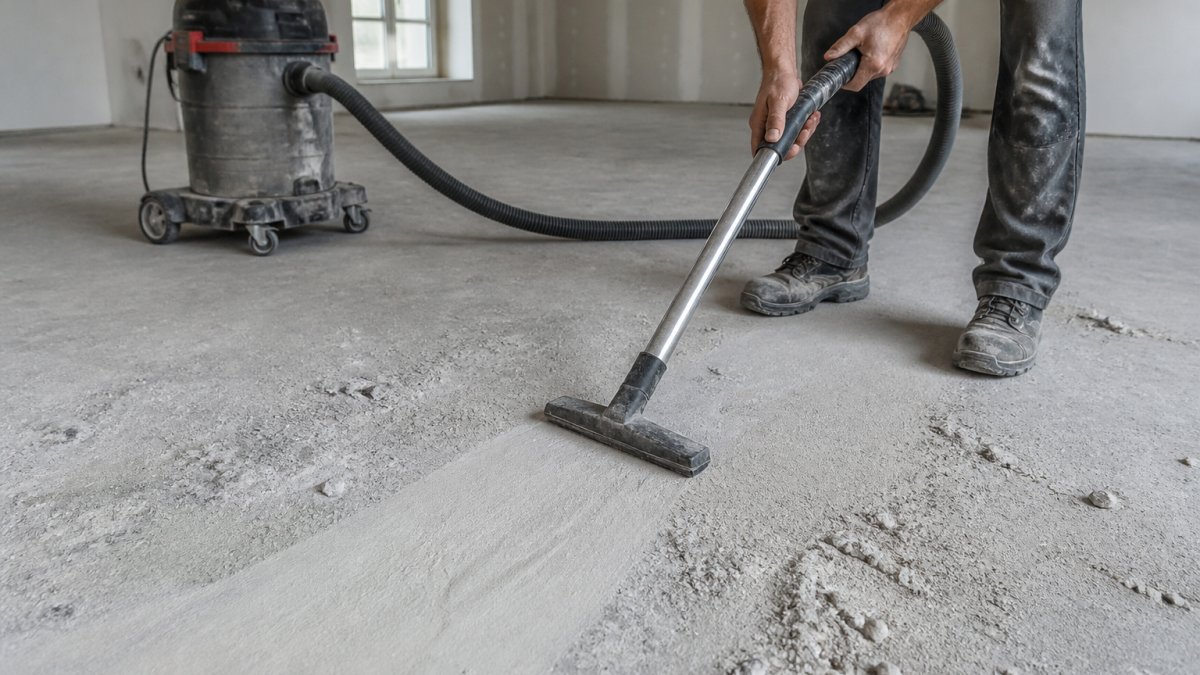
The failure mode is almost always preparation, not the product. Epoxy needs a clean, profiled, dry slab. Coatings applied over a dusty or damp surface peel within a season. A proper moisture test and surface prep are what separate a coating that lasts from one that lifts.
Basement Subfloor Insulation Requirements in Cold Climates
Subfloor insulation in a below-grade assembly has two jobs that must be solved together: raise the surface temperature of the floor, and keep warm interior air from reaching the cold slab where it can condense. A rigid foam subfloor panel with a bonded vapor retarder does both in a single layer, which is why it has become the default assembly for cold-climate basements.
R-Value Targets by Assembly
There is no single mandated number for a basement subfloor, but the practical range most builders work within is R-3 to R-5 for a thin panel system, and R-7 to R-10 where headroom allows a thicker rigid foam layer. The higher end matters most when the basement is finished living space and the slab sits below the frost line. A useful rule of thumb: the colder the slab and the more you intend to occupy the room, the more R-value you want underfoot.
Vapor Retarder Placement and Freeze-Thaw Cycling
The vapor retarder always goes on the warm side of the insulation, that is, above the rigid foam, directly under the flooring. Placing it below the foam traps moisture against the concrete, and in a freeze-thaw climate that moisture expands as it freezes, which is how spalling and efflorescence start. The correct stack, from slab up, is: concrete slab, rigid foam insulation, vapor retarder, flooring.
Radiant Heating Compatibility
Key Takeaway The assembly order is not negotiable: slab, then rigid foam, then vapor retarder, then floor. Get that sequence wrong and no amount of product quality will save the installation.
Matching the Subfloor to the Flooring
Best Practices for Basement Floor Preparation
Test the Slab Before You Buy Anything
Indoor Air Quality in a Sealed Basement
Plan for Repairability Before You Install
Pro Tip Photograph the subfloor assembly and the product labels before the floor goes down. If you ever need a warranty claim or a matching replacement, that record saves hours of guesswork.
The Climate-Specific Layer Most Guides Skip
Frequently Asked Questions
What is the most durable flooring for a basement in a cold climate?
Luxury vinyl plank and epoxy floor coating are the most durable for cold climate basements. LVP offers a thick wear layer, waterproof core, and dimensional stability through freeze-thaw cycles. Epoxy bonds directly to concrete and resists moisture migration. Ceramic and porcelain tile also last decades but feel colder underfoot. The best choice depends on your subfloor condition, moisture levels, and whether you want in-floor heating compatibility.
Does basement flooring need to be moisture-resistant in cold climates?
Yes. Cold climate basements face two moisture sources: groundwater vapor rising through concrete slabs and condensation from warm interior air meeting cold surfaces. A moisture barrier or vapor retarder under the flooring prevents mold and mildew growth. Luxury vinyl plank, epoxy, and tile handle moisture best. Engineered hardwood and cork need a proven vapor retarder and humidity control to stay stable.
Is luxury vinyl plank good for cold basements?
Luxury vinyl plank performs well in cold basements. Its waterproof core resists moisture from concrete slabs, and the click-lock installation method allows the floor to expand and contract through freeze-thaw cycles without buckling. Cork backing adds thermal resistance and sound attenuation. For extra warmth, choose an LVP with an attached underlayment and consider in-floor heating compatibility.
What are the basement subfloor insulation requirements before installing new flooring?
Basement subfloor insulation requirements depend on your slab condition and local building codes. A common approach is a rigid foam board or insulated subfloor panel with a vapor retarder on top of the concrete slab. This raises the floor surface temperature, reduces thermal conductivity, and protects the finished floor from moisture. Always check your municipality's building code for specific R-value minimums before installation.
A cold-climate basement floor only performs as well as the preparation underneath it, and that preparation is where most projects quietly go wrong. Northern Escapes Services handles basement flooring with detailed and innovative installation methods, comprehensive project tracking, and transparent pricing backed by detailed contracts, so you know what is happening at every stage. Get started with Northern Escapes Services and finish your basement with a floor built for the climate it sits in.
Get Started Today
Comments