Landscaping Services for Small Properties
Table of Contents
Why Professional Landscaping Services Matter for Small Properties
Small Backyard Design Ideas That Maximize Your Space
Vertical gardens and living walls
Multi-functional hardscaping elements
Hardscaping Installation for Small Yards
Retaining walls and segmental block solutions
Deck repair and terrace construction
How to Choose a Landscaping Contractor
Evaluating experience and project tracking
Understanding transparent pricing and contracts
Tree Pruning, Hedge Trimming, and Seasonal Cleanup
Why timing and technique matter for small spaces
Seasonal maintenance checklist for small properties
DIY vs. Professional Landscaping for Small Spaces
When DIY makes sense
When professional work is essential
Cost-benefit analysis for small properties
Frequently Asked Questions
Last Updated: September 28, 2026
Why Professional Landscaping Services Matter for Small Properties
Transforming a small outdoor space with landscaping services small properties requires a different approach than managing sprawling estates. Small properties demand strategic design choices and professional execution to maximize every square foot. At Northern Escapes Services, we've learned that the constraint of limited space often leads to more creative, functional results than larger yards allow.
The real advantage of professional landscaping services for small properties isn't just aesthetics, it's about intelligent space planning. When a backyard measures only 200 or 300 square feet, every design decision compounds. A poorly chosen layout wastes precious space. The right hardscaping, plant selection, and multi-functional elements transform that same footprint into an outdoor room that feels larger and serves multiple purposes.
Small property owners often hesitate to hire professionals, assuming the cost won't justify the investment on a modest plot. That assumption misses a critical point: professional contractors understand how to extract maximum value from constraint. They know which hardscaping elements create visual depth, which plantings define zones without crowding, and how to balance maintenance demands with visual impact.
Small Backyard Design Ideas That Maximize Your Space
The key to small backyard design is layering function and aesthetics without creating visual clutter. Think vertically, prioritize multi-use elements, and let negative space breathe.
Vertical gardens and living walls
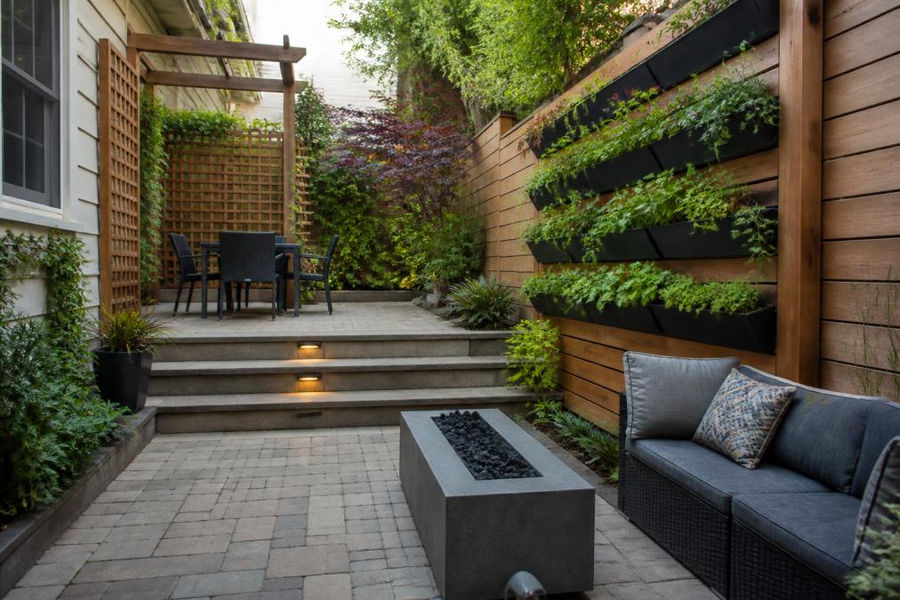
Vertical growing systems turn walls and fences into productive garden space without consuming floor area. A living wall or trellis system can support climbing plants, herbs, or flowering vines that draw the eye upward and create the illusion of a taller, more spacious yard.
Green walls also reduce perceived hardness in tight spaces. Instead of staring at a fence or siding, you see layered foliage. This psychological shift makes compact yards feel less cramped. Maintenance is straightforward, drip irrigation systems keep plants watered with minimal effort, and seasonal pruning takes just a few hours per year.
Multi-functional hardscaping elements
Hardscaping, patios, retaining walls, decking, and pathways, forms the structural backbone of small property design. The difference between cramped and cozy often comes down to how hardscape elements do double duty.
A built-in bench along a retaining wall provides seating without eating floor space. Raised planter beds serve as both visual borders and functional seating edges. Stepping stones create movement through the space while defining separate zones, a dining area here, a lounge area there, without walls or barriers.
Multi-functional hardscaping also reduces maintenance. Fewer plants means less watering and pruning. Hardscape features age gracefully and require only occasional cleaning or refreshing.
Hardscaping Installation for Small Yards
Professional hardscaping transforms small properties by adding structure, function, and visual interest. The installation itself requires precision, poor drainage or uneven surfaces undermine the entire design.
Retaining walls and segmental block solutions
Retaining walls serve multiple purposes in small yards: they manage slopes, create level planting areas, define space, and add architectural character. Segmental block (interlocking concrete units) offers flexibility, durability, and cleaner aesthetics than poured concrete or stone.
Properly installed segmental block walls last decades with minimal maintenance. The blocks lock together without mortar, allowing slight movement that prevents cracking in freeze-thaw cycles. Northern Escapes Services prioritizes correct base preparation and drainage, details that separate professional work from amateur attempts.
A retaining wall also creates an opportunity for tiered planting. The top of the wall becomes a ledge for trailing plants. The area behind the wall can accommodate shrubs or perennials that would otherwise consume precious ground space.
Deck repair and terrace construction
Decking extends usable outdoor space and defines zones within small yards. Composite decking materials resist rot and require less maintenance than wood, making them practical for properties where space limits your ability to move around a structure for repairs.
Terrace construction, hardscaping with stone, pavers, or composite materials, creates permanent outdoor rooms. A small terrace near the house becomes a dining or seating area. Properly graded and installed, it sheds water and provides stable footing year-round.
Both decking and terraces benefit from professional installation. Correct slope prevents pooling water. Proper support structures ensure safety and longevity. Finishing details, edge treatments, transitions, drainage, separate quality work from rushed jobs.
How to Choose a Landscaping Contractor
Selecting the right contractor determines whether your small property project succeeds or disappoints. The wrong choice leads to cost overruns, unclear timelines, and poor outcomes.
Evaluating experience and project tracking
Experience matters, but specific experience with landscaping services small properties matters more. A contractor experienced with large commercial sites may lack the precision small yards demand. Ask for references from recent small-property projects. Request before-and-after photos that show how they handled space constraints.
Project tracking separates professional contractors from those who wing it. Ask how they'll communicate progress. Will you receive regular updates? How do they handle changes or unexpected conditions? Northern Escapes Services maintains detailed project documentation and transparent communication throughout every phase, a commitment we've held since 2019.
A contractor who resists questions about process is a red flag.
Understanding transparent pricing and contracts
Transparent pricing means you understand what's included, what costs extra, and what happens if conditions change. A detailed contract specifies materials, labor, timeline, and payment schedule.
Tree Pruning, Hedge Trimming, and Seasonal Cleanup
Small properties demand a maintenance rhythm that differs from larger yards. Because every plant is visible and contributes to the overall impression, neglect shows immediately. Professional tree and hedge care keeps compact spaces healthy, visually sharp, and prevents overgrowth from overwhelming limited square footage.
Why timing and technique matter for small spaces
Proper pruning improves tree health by removing dead wood, improving airflow, and encouraging balanced growth. For small properties, pruning also serves a design function: it maintains clear sight lines, prevents branches from encroaching on patios or pathways, and keeps the canopy proportional to the yard size.
Seasonal maintenance checklist for small properties
Spring (April-May):
Remove winter-damaged branches and dead wood from trees and shrubs
Prune spring-flowering shrubs (lilac, forsythia) immediately after bloom to avoid cutting next year's flower buds
Inspect hedges for winter breakage and begin shaping
Clear fallen branches and winter debris from planting beds and pathways
Summer (June-August):
Trim hedges mid-summer to maintain shape and density
Remove lower branches from trees to improve sight lines and air circulation
Deadhead flowering shrubs to encourage continued blooms
Clear gutters and downspouts of debris to prevent water damage
Fall (September-October):
Light pruning of deciduous trees to remove crossing or rubbing branches
Cut back perennials and ornamental grasses after frost
Rake fallen leaves from planting beds and pathways (leaving some leaf litter in garden beds provides winter insulation for beneficial insects)
Inspect trees for dead branches that may fall under snow load
Winter (November-March):
Prune dormant deciduous trees and shrubs while structure is visible
Remove snow and ice from evergreen branches to prevent breakage
Monitor for storm damage
For small properties, seasonal cleanup prevents the yard from looking neglected and keeps maintenance manageable. A professional contractor can bundle these tasks into a maintenance schedule that fits your budget and timeline, often costing less than addressing overgrowth and damage after the fact.
DIY vs. Professional Landscaping for Small Spaces
The decision to hire professionals or tackle landscaping yourself depends on project complexity, your skill level, available tools, timeline, and the cost of failure. For small properties, this calculation differs from larger yards because mistakes are more visible and harder to hide.
When DIY makes sense
DIY appeals when projects are straightforward, low-risk, and budget is tight. Planting a garden bed, refreshing mulch, basic weeding, and seasonal cleanup are tasks most homeowners can handle with basic tools and a weekend of effort. These projects build familiarity with your space, create a sense of accomplishment, and cost only materials.
Other low-risk DIY projects include:
Installing drip irrigation or soaker hoses (requires only basic assembly and digging shallow trenches)
Applying wood stain or sealant to existing decking (if the structure is sound)
Planting perennials, shrubs, or trees from nursery stock (assuming proper site preparation)
Pruning small shrubs and hedges with hand tools (for plants under 2 metres tall)
Raking leaves, clearing gutters, and general tidying
When professional work is essential
Professional work becomes necessary for structural changes, hardscaping, and complex designs. These projects require skill, specialized tools, and knowledge of building codes and site conditions.
Cost-benefit analysis for small properties
Hardscaping: A retaining wall or patio installed by a professional lasts 20-30 years with minimal maintenance. DIY attempts often fail within 5-10 years, requiring expensive replacement. The professional option costs more initially but is cheaper over time.
Frequently Asked Questions
What should I look for when hiring a landscaping contractor?
Look for contractors with clear communication practices, detailed project tracking systems, and transparent pricing. Ask for references from similar small-property projects, verify they provide written contracts outlining what's included, and confirm they explain costs upfront without hidden fees. A professional contractor will conduct a site assessment and provide a detailed quote before work begins.
How can hardscaping improve a small property's functionality?
Hardscaping installation creates defined zones in compact spaces, adds usable surfaces for seating or entertaining, and improves drainage and soil stability. Retaining walls, segmental block features, and deck repairs maximize outdoor living while reducing maintenance demands. Well-designed hardscaping also enhances curb appeal and can increase property value on smaller residential properties.
What are the best design features for small residential properties?
Vertical gardens, living walls, and tiered planting maximize growing space without consuming ground area. Multi-functional hardscaping, such as seating walls that double as retaining structures, adds both beauty and utility. Native plant landscaping reduces maintenance while supporting local ecosystems. Thoughtful site assessment ensures every element serves a purpose in a compact layout.
How do professional landscapers maximize space in compact yards?
Professionals use layered design with vertical elements, strategic plant selection, and efficient hardscaping to create depth and function. They assess soil conditions, plan for proper drainage, and select low-maintenance plants suited to your climate. Multi-level terraces, deck repairs, and retaining walls create distinct areas for different activities without overwhelming the available space.
Small property landscaping requires precision, creativity, and strategic planning. Northern Escapes Services brings detailed installation methods, comprehensive project tracking, and transparent pricing to every project, ensuring your compact outdoor space becomes a functional, beautiful extension of your home. Ready to transform your small property? Contact Northern Escapes Services today for a detailed consultation and discover how professional landscaping services can maximize your space.
Get Started Today


Comments